Underground Safety Upgrade: Explosion-Proof Telephones Deployed in Colombian Mining Project
Leave a message
In a significant step toward enhancing operational safety and emergency communication, a large-scale underground mining project in Colombia has successfully deployed explosion-proof industrial telephones across key sections of its mine network. This initiative reflects the growing emphasis on worker safety, regulatory compliance, and reliable communication systems in hazardous industrial environments.
Addressing Critical Safety Needs in Underground Mining
Underground mining environments are inherently dangerous. Workers operate in confined spaces with limited visibility, exposure to toxic gases, high humidity, dust, and the constant risk of explosions caused by methane or coal dust. In such conditions, reliable communication is not just a convenience-it is a lifeline.
Recognizing these challenges, the Colombian mining project prioritized the installation of explosion-proof telephones designed specifically for hazardous areas. These devices provide a secure and durable communication channel that remains operational even in extreme conditions, ensuring that workers can maintain contact with control centers and emergency teams at all times.
Robust Design for Harsh Environments
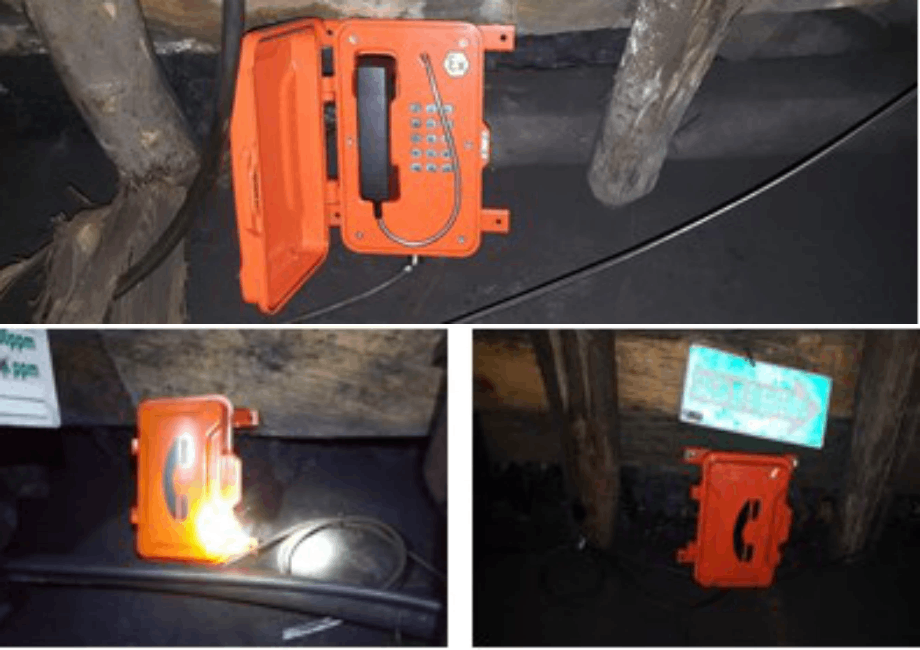
The installed telephones feature a rugged, industrial-grade design with a high-visibility orange enclosure, making them easy to locate in low-light environments. Built with corrosion-resistant materials and sealed to prevent ingress of dust and water, these units are engineered to withstand the demanding conditions of underground mines.
Key features include:
Explosion-proof certification for use in gas and dust hazardous areas
Weatherproof and waterproof housing to ensure durability
Noise-canceling handset for clear communication in high-noise environments
Integrated keypad and emergency call functions for ease of use
High-intensity LED indicator light to assist in locating the device during emergencies
The images captured from the installation site show the telephones mounted securely along mine walls and structural supports, positioned strategically near work zones and passageways. The bright LED illumination further enhances visibility, especially during power outages or low-light situations.
Strategic Placement for Maximum Coverage
Proper placement of communication equipment is critical in underground operations. The project team conducted a comprehensive site assessment to determine optimal installation points, ensuring full coverage throughout the mine.
Telephones were installed:
Along main tunnels and access routes
Near heavy machinery operation zones
At key junctions and emergency refuge areas
Close to ventilation shafts and control points
This strategic deployment ensures that no matter where workers are located, a communication device is always within reach.
Enhancing Emergency Response Capabilities
One of the primary objectives of this installation is to improve emergency response times. In the event of an incident-such as a gas leak, equipment failure, or structural collapse-workers can immediately contact the control center using the nearest telephone.
The system enables:
Instant communication with surface control rooms
Rapid coordination of rescue operations
Real-time reporting of hazards
Improved evacuation management
By reducing communication delays, the system significantly increases the chances of preventing minor incidents from escalating into major emergencies.
Integration with Mine Communication Systems
The explosion-proof telephones are integrated into the mine's broader communication infrastructure, which may include VoIP systems, dispatch consoles, and monitoring platforms. This integration allows seamless communication between underground personnel and surface operators.
In addition, the system supports:
Point-to-point and group communication
Emergency broadcast capabilities
Compatibility with existing PBX or IP-based systems
Such flexibility ensures that the telephones can adapt to the evolving needs of the mining operation.
Compliance with International Safety Standards
The deployment aligns with international safety regulations and best practices for hazardous environments. Explosion-proof equipment is essential in industries where flammable gases or dust are present, and the use of certified communication devices helps mining operators meet strict compliance requirements.
By implementing these telephones, the Colombian mining project demonstrates its commitment to:
Worker safety and welfare
Regulatory compliance
Operational reliability
Risk mitigation
Positive Impact on Workforce Confidence
Beyond technical benefits, the installation has had a positive impact on worker morale. Knowing that reliable communication tools are readily available provides a sense of security for miners working in challenging conditions.
Workers have reported:
Increased confidence in emergency preparedness
Improved coordination during daily operations
Greater trust in safety management systems
This human factor is crucial, as a confident workforce is more productive and better equipped to handle unexpected situations.
Supporting Sustainable Mining Practices
Modern mining operations are increasingly focused on sustainability-not only in environmental terms but also in ensuring safe and responsible working conditions. The adoption of advanced communication systems plays a key role in achieving these goals.
By investing in explosion-proof telephones, the project contributes to:
Safer working environments
Reduced accident rates
Enhanced operational efficiency
Long-term sustainability of mining activities
Future Expansion and Technological Upgrades
The successful deployment of these telephones marks the beginning of a broader safety modernization initiative. Plans are already underway to expand the system to additional sections of the mine and integrate it with other safety technologies, such as:
Gas detection systems
Video surveillance
Personnel tracking solutions
Automated alert systems
These upgrades will further strengthen the mine's safety infrastructure and ensure continuous improvement in risk management.
Conclusion
The installation of explosion-proof telephones in this Colombian underground mining project represents a major advancement in industrial safety and communication. By combining robust engineering, strategic deployment, and system integration, the project has set a new benchmark for safety standards in hazardous environments.
As mining operations continue to evolve, the importance of reliable communication systems cannot be overstated. This initiative not only protects lives but also enhances operational resilience, ensuring that the mine can operate safely and efficiently in one of the most challenging environments on earth.
Through this deployment, the Colombian mining project demonstrates that safety and productivity go hand in hand-and that investing in the right technology is essential for achieving both.